
Before comparing fractional CMOs in Sydney or elsewhere in Australia, write down the growth problem you want someone to own. A title tells you less than a clear answer to: what needs to change, and who will make it happen?
You might need someone to lead your existing marketing team. You might need an agency to find the next source of growth and build the marketing to support it. Get clear on the job before making a shortlist.
1. Write a brief about the growth problem
Is acquisition stuck? Are you entering a new market? Does the team have plenty of activity but no clear next move?
Put the problem, what you have tried, and the outcome you want into a short brief. Use it in each conversation so you can compare how people approach the same job.
Ask what they would investigate first and how they would decide where to spend your budget. At Baumr, we start with the customer and the growth opportunity. The channels follow the work.
2. Build a shortlist around the work
Ask founders and teams with a similar growth problem who they would recommend. Look at the pages, campaigns, or technical work those people have delivered, and the client outcomes behind it.
Make a small shortlist around the job in your brief. If you need someone available for Sydney meetings, confirm that before arranging a call.
3. Check who will lead and deliver
Find out where the responsibility sits. Who sets the priorities? Who updates the pages, runs the campaigns, fixes the technical problems, and follows through?
We bring in specialists around the job. That might mean content, paid media, an AI specialist, or a growth engineer. Your existing team needs clear ownership too. Ask which skills are already available and which gaps need filling.
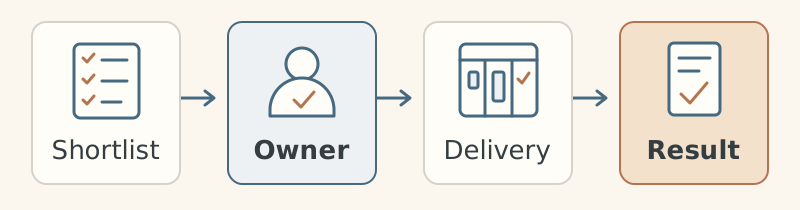
4. Ask for results you can understand
Look for the business outcome first: sales, revenue, qualified pipeline, or better acquisition costs. Traffic and rankings can help explain how it happened.
Ask about the starting point, timeframe, and work behind the result. One strong outcome with a couple of supporting figures is more useful than a wall of percentages you cannot interpret. Keep the figures tied to the same engagement so the story adds up.
5. Agree how you will work together
If your customers or team are overseas, check meeting times and how decisions and progress will be shared between calls.
Before committing, agree what the first phase covers, who owns it, and how you will judge progress. Ask how priorities and costs will be documented, and how the team will decide what to change next.
Take your brief into the first conversation. Leave with a clearer next step, a recommended scope if they can help, and a direct answer if the fit is wrong.