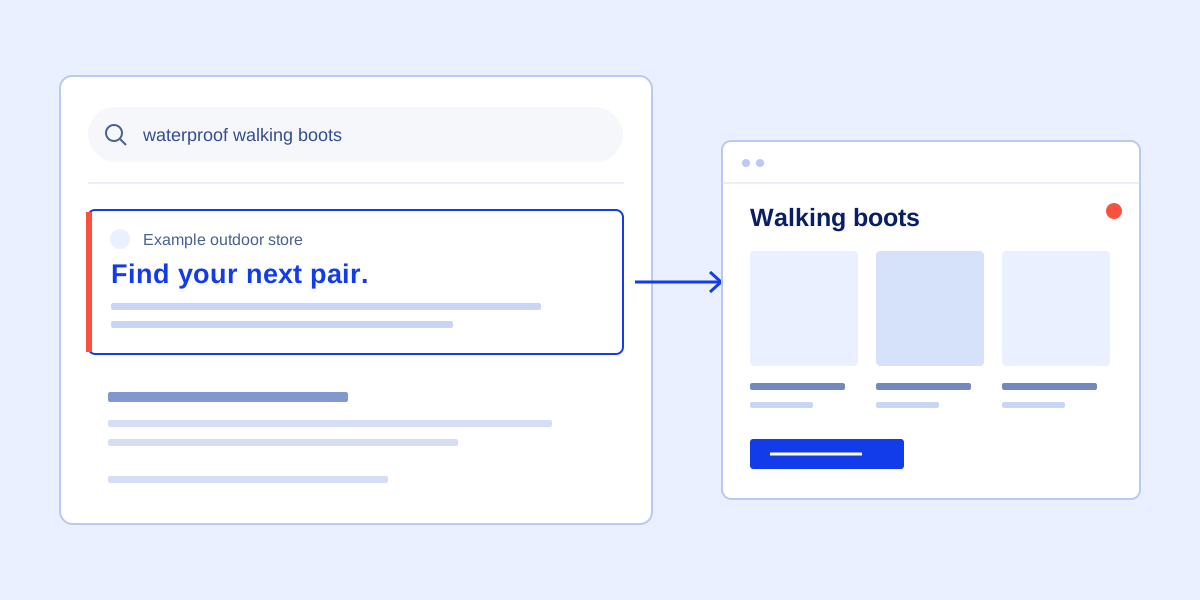
Buyers use Google, ChatGPT, Claude, Gemini, and Perplexity to find and compare providers. The same pages and outside sources often shape what they find.
A small team has to choose where the next week of work goes. Start with whatever is holding buyers back: the page that leaves them guessing, the technical issue that hides it, or the enquiry path that loses them.
Start with the pages closest to a sale
Product, category, comparison, and integration pages help buyers decide whether you fit their needs. Explain the category, answer the questions that come up before a sale, and give people evidence they can check.
- Search & AI
- Buyer page
- Enquiries & sales
Use the questions your sales team hears. What does the product do? Who is it for? What does it replace? What does a customer need before they can use it? Clear answers give buyers and your sales team something useful to work with.
Check where visitors drop off before commissioning more content. The problem may be targeting, the offer, or a broken enquiry path. More traffic will not fix a booking button that goes nowhere.
Look at the sources behind AI answers
Test the questions customers ask when comparing providers in the systems they use. Record the prompt, date, answer, brands mentioned, and sources cited. Track mentions and citations separately: an answer can name a business without linking to its site.
When a competitor appears and you do not, inspect the sources behind the answer. You may need a stronger comparison page, current product information, or credible outside coverage. Check the description of your offer, too. A mention is not much help if it gets the product wrong.
Make comparison, alternative, and use case pages worth reading. Explain the trade-offs and show the evidence for your claims. Improving a source does not guarantee that an AI system will change its answer.
Check technical access before adding more pages
Review crawl health, indexation, canonical URLs, and internal links. Important content needs to be in the rendered page, with links customers and crawlers can reach. Structured data should describe the content that is actually there.
AI crawler settings need a little care. OpenAI's OAI-SearchBot supports search results in ChatGPT. GPTBot collects content that may be used for model training. You can control the two independently, so treating every AI bot the same can block access you intended to allow. See OpenAI's crawler documentation .
Anthropic makes a similar distinction. Claude-SearchBot supports search, Claude-User retrieves pages for user requests, and ClaudeBot collects material that may contribute to training. Review the Anthropic crawler guidance against your access policy. Allowing a crawler is not a promise of a recommendation.
Give the first 90 days a practical scope
First month: decide what deserves attention
Assess search demand, technical issues, existing pages, and conversion paths. Choose the first commercial pages and engineering fixes. Agree what you will measure and who owns each task.
Second month: put the work in front of customers
Improve the priority pages, publish useful new content, and make the agreed technical fixes. Connect related pages with internal links. Keep the scope small enough for your team to finish and review.
Third month: use the evidence
Review search and conversion data. Retest the same buyer prompts to compare mentions, citations, and source coverage. Expand useful page patterns and plan the next quarter around what you learned. Ninety days is a planning window, not a deadline for guaranteed rankings or revenue.
Measure whether the right people become customers
Traffic is useful context. Qualified enquiries, sales, and acquisition costs show whether the work is helping the business. Where the data allows, connect the landing page and channel to the opportunity and eventual sale.

For a case study, lead with the strongest business outcome. Add one or two supporting figures from the same engagement and period. Keep unrelated client results separate.
If search visits rise while enquiries stay flat, check the audience, offer, and conversion path before increasing spend. A clearer page or better follow-up may do more than another batch of articles.